Thursday, February 3, 2011

Moldova through Korean eyes..


동유럽의 보석 ‘몰도바’, 푸른 꿈을 꾸다
        
■ 방송일시 : 2010년 12월 14일 화요일 오전 11시 20분(2TV)
■ 제 작 사 : 혜윰

몰도바에 한국어학과가 생겼습니다”  몰디브 에요?”   아니요, 몰도바요
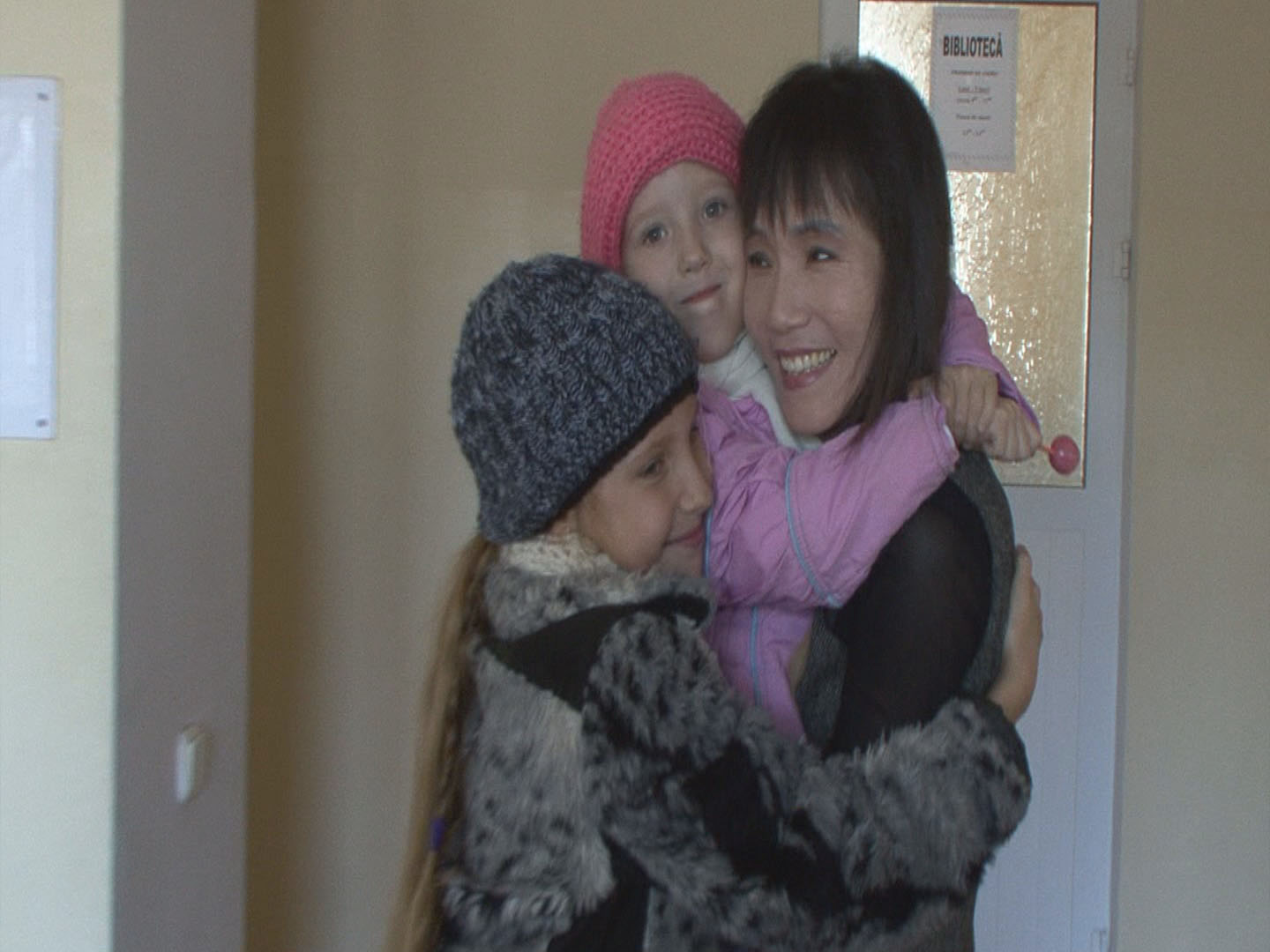
1991 년 구소련으로부터의 독립을 선언한 동유럽의 작은 나라 ‘몰도바 공화국(Republic of Moldova)’. 이름조차 생소한 이 나라에 올해 9월 정식으로 한국어 학과가 생겼다. 그리고 이 중심에 있는 몰도바의 유일한 한국인! 한호진(47), 김원심(50)씨 부부이다. 두 사람이 몰도바에 들어온 92년, 한 때 부유했던 나라는 구소련의 붕괴와 함께 체제 변화의 소용돌이에 휩쓸려 ‘혼돈’만이 남아 있었다. 간단한 교육을 받는 것도 어렵던 청년들을 위해 기술과 어학을 무료로 가르치는 학교를 세운 두 사람. 이제는 몰도바와 한국, 양국의 교두보 역할까지 하고 있다.
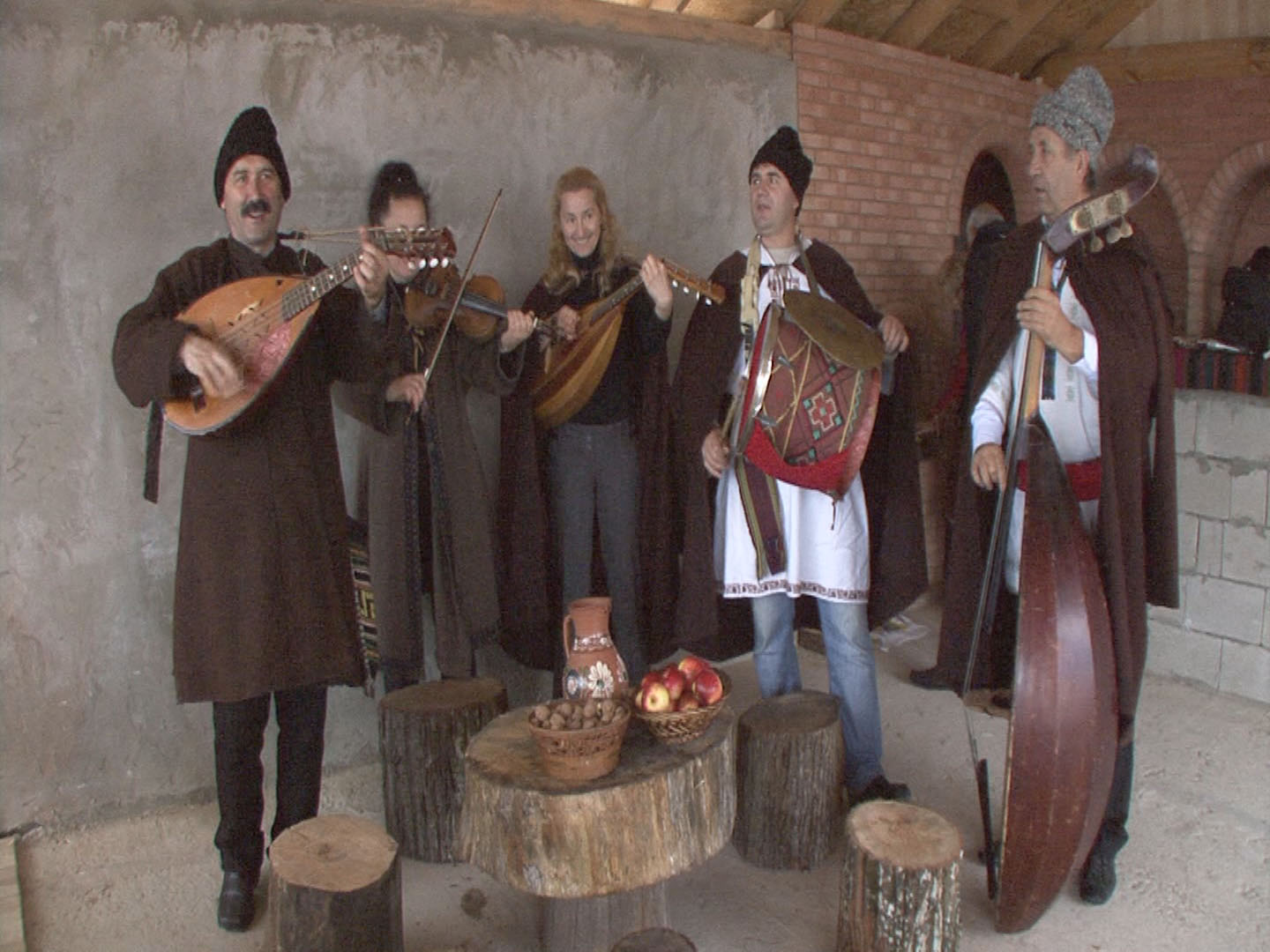
목가적인 땅, 소박한 아름다움이 있는 몰도바에서 만들어가는 희망의 현장. 한호진, 김원심 부부와 몰도바 청년들이 그리는 푸른 꿈으로 함께 들어가 본다.

<주요 내용>
1. 1992년 소련 붕괴 그 이후...
                            한호진씨 부부가 몰도바에 사는 이유?
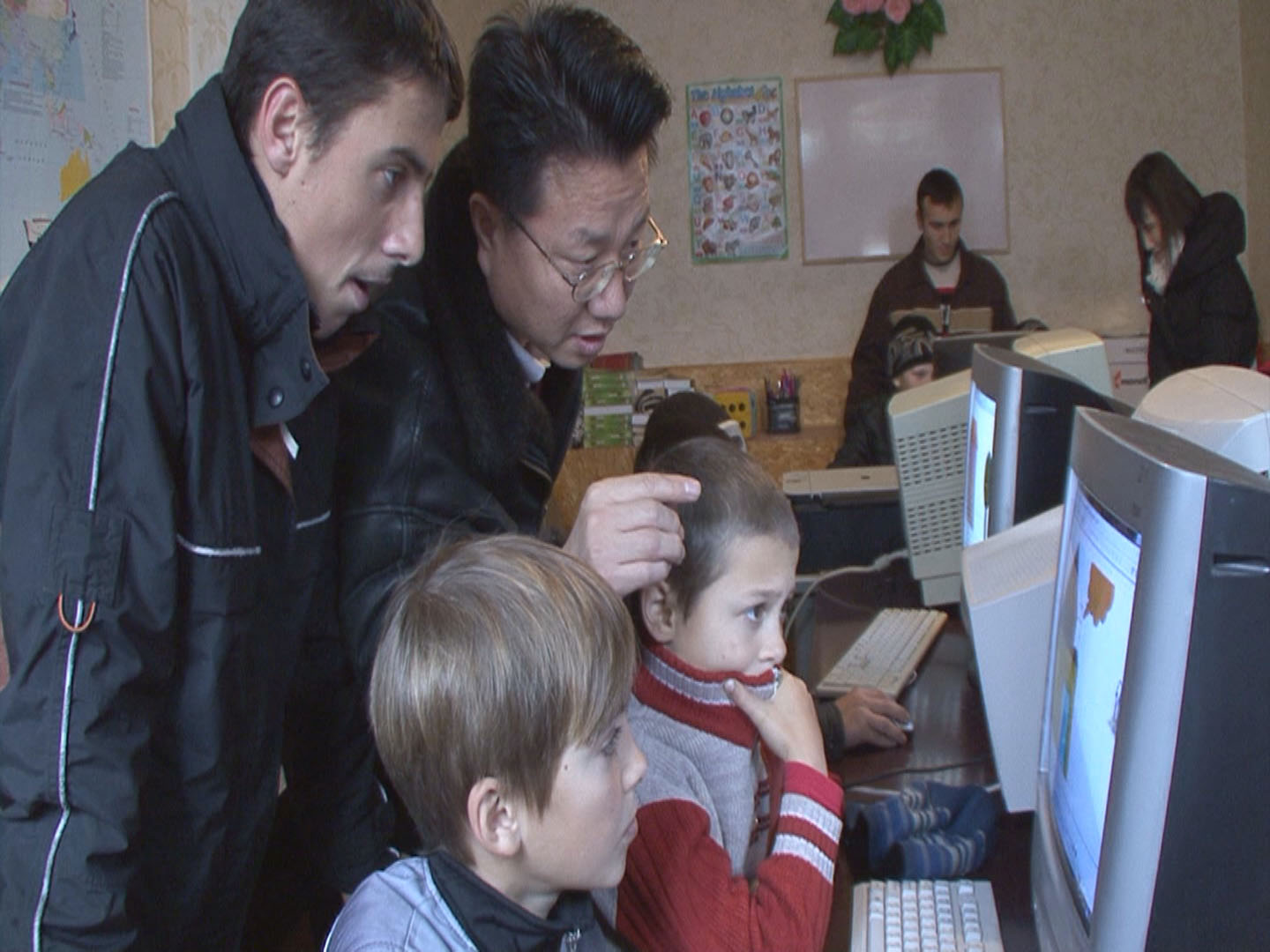
  루 마니아와 우크라이나의 중간에 자리한 동유럽의 내륙국 ‘몰도바’. 한호진, 김원심 부부가 이 낯선 나라에 들어온 것은 1992년. 소련의 붕괴와 함께 몰도바가 공산주의에서 자유주로 체제를 전환했을 당시였다. 하지만 얼마 지나지 않아 다시 공산주의로의 복귀를 결정. 이런 특수한 체제의 변화와 유럽과 러시아의 알력 사이에서 몰도바의 경제상황은 악화되어 갔다. 혼란스러운 사회 속 제대로 된 교육도 받지 못한 채 낮에는 일을 하고 밤에는 술을 마시는 몰도바의 아이들. 꿈도 희망도 없이 살아가는 모습을 본 부부는 방황하는 아이들의 교육을 위해 지역 공부방을 시작했다. 그리고 1997엔 ‘기어기 학교’를 만들어 기독교 정신을 기반으로 컴퓨터, 태권도, 영어, 재봉 등의 기술과 어학을 무료로 가르치고 있다. 이후 수많은 몰도바 청년들이 자신의 꿈을 찾아 학교를 졸업했다. 자신의 고향 시골에서 아이들을 가르치는 ‘슬라빅’ 부부도 그 중 하나. 새로 기증할 컴퓨터를 들고 제자 부부를 찾은 한호진씨 내외. 그곳에서 꿈을 펼친 자신의 제자와 그 제자의 제자들로 이어 꿈을 키워가는 몰도바의 모습을 본다.

 
2. 어머님, 동유럽의 숨겨진 보석 몰도바를 소개합니다!
                       - 55km, 세계에서 가장 긴 포도주 저장고

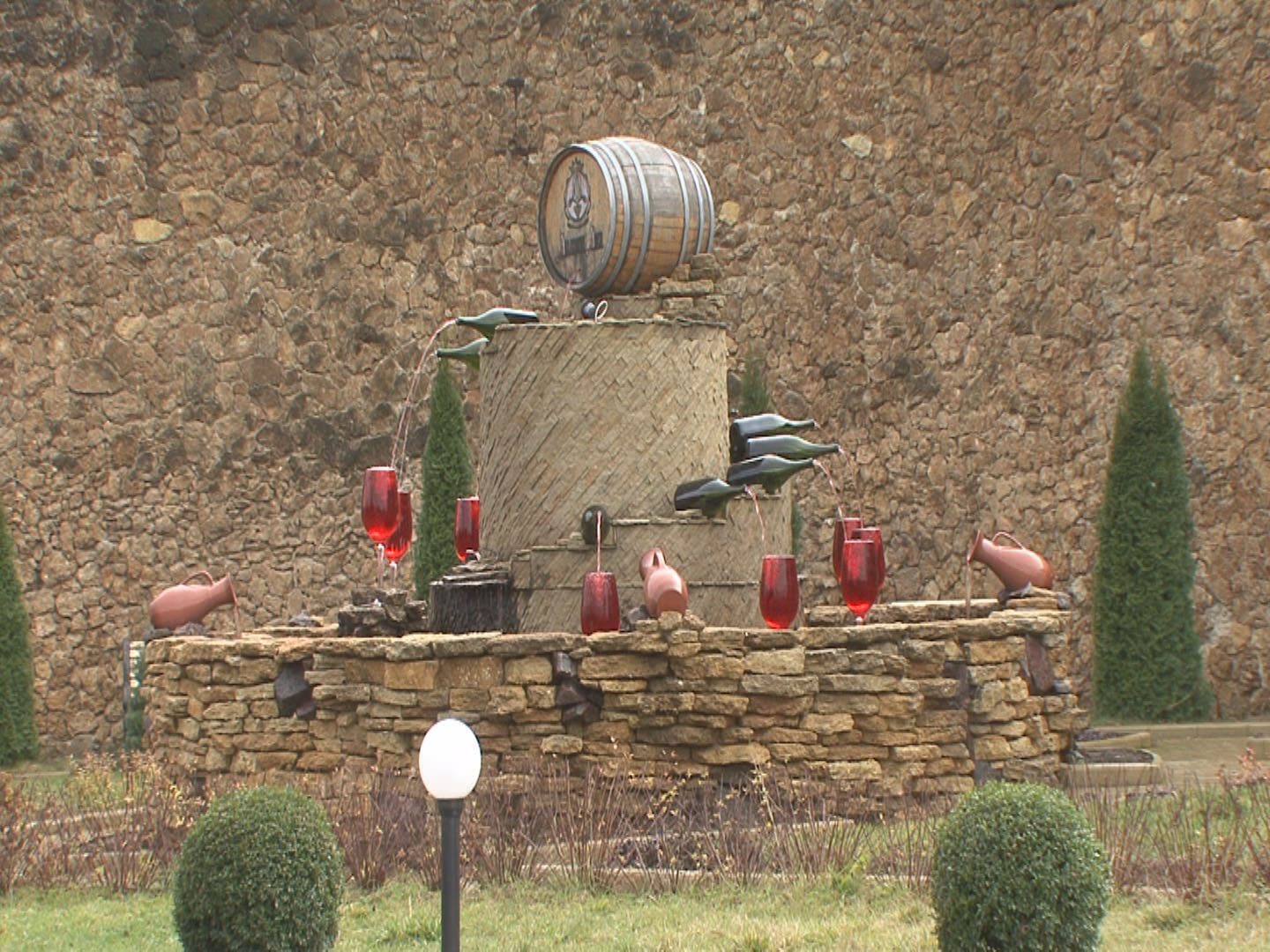
낯 선 땅 몰도바에서 한국인이라곤 서로 뿐이었던 한호진, 김원심 부부. 그런데 얼마 전 몰도바엔 한국 사람이 1명 더 늘었다. 한호진씨의 어머니 박순자(72)씨가 오랜 시간 떨어져 있던 아들 내외와 함께 살고자 몰도바로 온 것. 부부는 그동안 챙겨드리지 못했던 어머님께 몰도바의 아름다운 풍경과 맛있는 음식을 느끼게 해드리고자 노력중이다. 오랜만의 휴일, 한호진씨 부부는 어머니와 함께 몰도바의 명소, 포도주 저장 창고를 방문한다. 지하에 형성된 총 200km의 굴, 그 중 55km에 보관되어 있는 150만 병의 와인이 만들어 내는 장관. 한 때 소련에 많은 양의 와인(포도주)을 공급했던 와인의 고장 몰도바의 명성을 엿본다.


3. 몰도바 새로운 날개를 달다
                           - 울림(ULIM) 대학교의 한국어 학과
  새 벽같이 일어나 몰도바 국경 넘어 우크라이나로 향한 한호진씨 부부. 일전에 요청한 한국어 책들이 우크라이나 대사관에 도착했다는 소식을 들어서 이다. 갑자기 내린 폭설 속에서 왕복 20시간을 달린 고된 일정이었지만 600여권의 한국어 책을 들고 몰도바로 돌아오는 부부는 마냥 신이 난다. 이 책은 몰도바 울림 대학에서 한국어를 공부하고 있는 학생들을 위한 것이다.
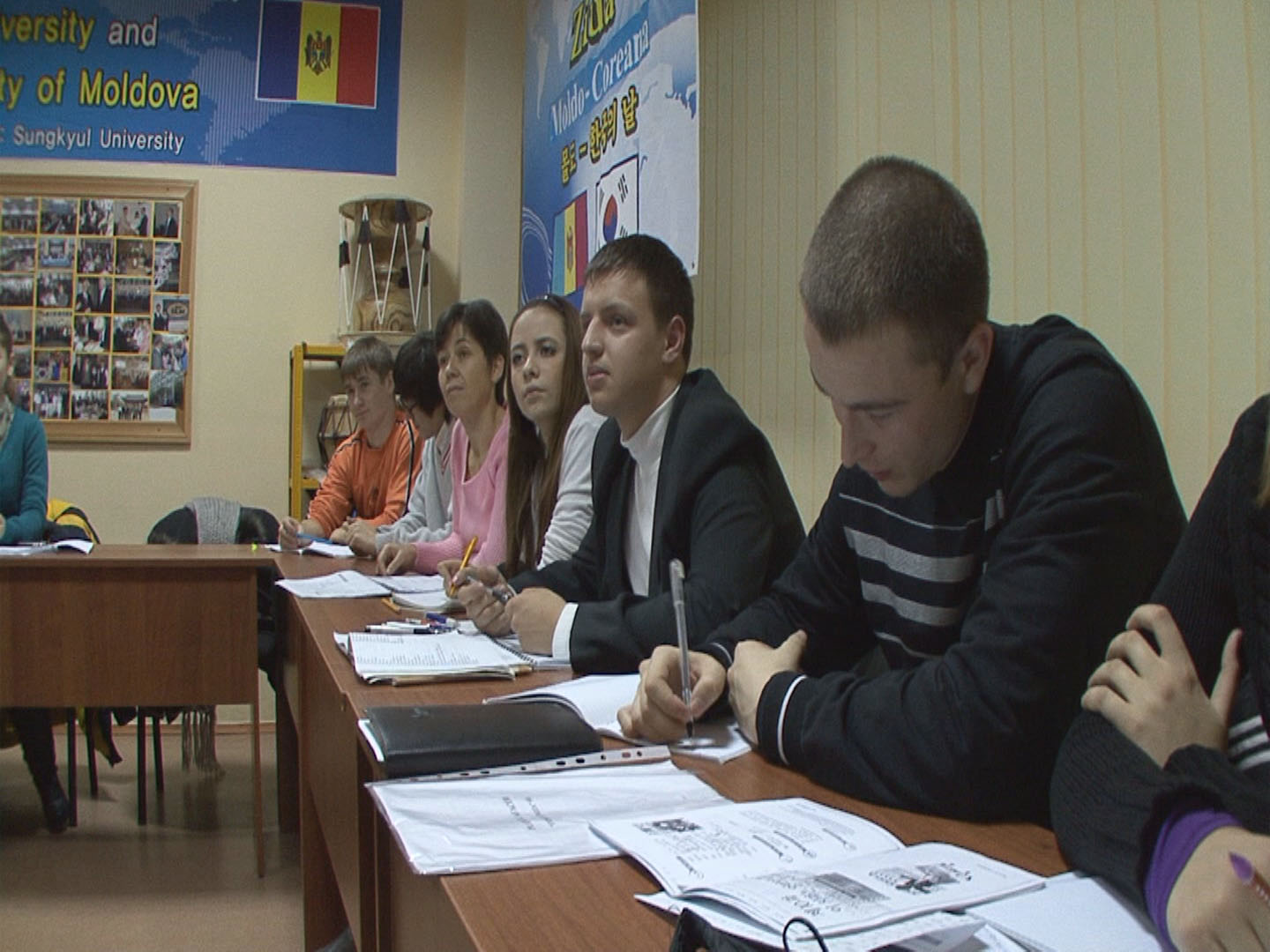
   지 난 9월 몰도바에는 한국어학과가 생겼다. 최근 몰도바에 불어온 한류열풍과 함께 한국어에 대한 학생들의 관심이 높아졌기 때문이다. 이에 한호진씨 부부가 한국어 학과 체계 닦기에 나섰다. 한국 대사관도 없는 몰도바에서 한호진씨 부부가 민간 외교관의 역할을 톡톡히 하고 있는 것. ‘비’와 ‘송혜교’가 출연한 드라마를 보며 한국어를 공부하는 시간. 너무 많이 굴러가버리는 서툰 발음에 웃음도 나지만 한국어를 배우는 학생들의 자세는 누구보다 진지하다. 한국을 동경하고 한국에 가고 싶다는 한국어과 학생들. 부부가 가르쳐 주는 ‘한글’은 이들에게 꿈을 이룰 수 있는 새로운 날개가 되어주고 있다.
 

Video available at http://www.kbs.co.kr/2tv/sisa/loveworld/vod/1689559_34240.html
Sources: http://www.kbs.co.kr

Thursday, January 20, 2011

Korea and Moldova.....how different?

If South Korea were your home instead of Moldova you would...
 
....make 12.2 times more money
The GDP per capita in South Korea is $28,000 while in Moldova it is $2,300
This entry shows GDP on a purchasing power parity basis divided by population as of 1 July for the same year. A nation's GDP at purchasing power parity (PPP) exchange rates is the sum value of all goods and services produced in the country valued at prices prevailing in the United States. This is the measure most economists prefer when looking at per-capita welfare and when comparing living conditions or use of resources across countries. The measure is difficult to compute, as a US dollar value has to be assigned to all goods and services in the country regardless of whether these goods and services have a direct equivalent in the United States (for example, the value of an ox-cart or non-US military equipment); as a result, PPP estimates for some countries are based on a small and sometimes different set of goods and services. In addition, many countries do not formally participate in the World Bank's PPP project that calculates these measures, so the resulting GDP estimates for these countries may lack precision. For many developing countries, PPP-based GDP measures are multiples of the official exchange rate (OER) measure. The differences between the OER- and PPP-denominated GDP values for most of the wealthy industrialized countries are generally much smaller.
Source: CIA World Factbook
 
....consume 11.4 times more oil
South Korea consumes 1.8782 gallons of oil per day per capita while Moldova consumes 0.1654
This entry is the total oil consumed in gallons per day (gal/day) divided by the population. The discrepancy between the amount of oil produced and/or imported and the amount consumed and/or exported is due to the omission of stock changes, refinery gains, and other complicating factors.
Source: CIA World Factbook
 
....use 7.8 times more electricity
The per capita consumption of electricity in South Korea is 7,918kWh while in Moldova it is 1,012kWh.
This entry consists of total electricity generated annually plus imports and minus exports, expressed in kilowatt-hours. The discrepancy between the amount of electricity generated and/or imported and the amount consumed and/or exported is accounted for as loss in transmission and distribution.
Source: CIA World Factbook
 
....spend 6.1 times more money on health care
Per capita public and private health expenditures combined in South Korea are $1,467 USD while Moldova spends $242 USD
This entry contains the per capita public and private health expenditure at purchase power parity using US Dollars. This figure combines government, personal, and employer spending on health care
Source: World Health Organization
 
....have 66.8% less chance of dying in infancy
The number of deaths of infants under one year old in a given year per 1,000 live births in South Korea is 4.24 while in Moldova it is 12.77.
This entry gives the number of deaths of infants under one year old in a given year per 1,000 live births in the same year; included is the total death rate, and deaths by sex, male and female. This rate is often used as an indicator of the level of health in a country.
Source: CIA World Factbook
 
....have 57.69% more chance of being unemployed
South Korea has an unemployment rate of 4.10% while Moldova has 2.60%
This entry contains the percent of the labor force that is without jobs.
Source: CIA World Factbook
 
....live 7.72 years longer
The life expectancy at birth in South Korea is 78.81 while in Moldova it is 71.09.
This entry contains the average number of years to be lived by a group of people born in the same year, if mortality at each age remains constant in the future. The entry includes total population as well as the male and female components. Life expectancy at birth is also a measure of overall quality of life in a country and summarizes the mortality at all ages. It can also be thought of as indicating the potential return on investment in human capital and is necessary for the calculation of various actuarial measures.
Source: CIA World Factbook
 
....have 21.86% more fewer babies
The annual number of births per 1,000 people in South Korea is 8.72 while in Moldova it is 11.16.
This entry gives the average annual number of births during a year per 1,000 persons in the population at midyear; also known as crude birth rate. The birth rate is usually the dominant factor in determining the rate of population growth. It depends on both the level of fertility and the age structure of the population.
Source: CIA World Factbook
 
....be 75% less likely to have HIV/AIDS
The number of adults living with HIV/AIDS in South Korea is 0.10% while in Moldova it is 0.40%.
This entry gives an estimate of the percentage of adults (aged 15-49) living with HIV/AIDS. The adult prevalence rate is calculated by dividing the estimated number of adults living with HIV/AIDS at yearend by the total adult population at yearend.
Source: CIA World Factbook
 
....experience 5.72% less of a class divide
The GINI index measures the degree of inequality in the distribution of family income. In South Korea is 31.30 while in Moldova it is 33.20.
This index measures the degree of inequality in the distribution of family income in a country. The index is calculated from the Lorenz curve, in which cumulative family income is plotted against the number of families arranged from the poorest to the richest. The index is the ratio of (a) the area between a country's Lorenz curve and the 45 degree helping line to (b) the entire triangular area under the 45 degree line. The more nearly equal a country's income distribution, the closer its Lorenz curve to the 45 degree line and the lower its Gini index, e.g., a Scandinavian country with an index of 25. The more unequal a country's income distribution, the farther its Lorenz curve from the 45 degree line and the higher its Gini index, e.g., a Sub-Saharan country with an index of 50. If income were distributed with perfect equality, the Lorenz curve would coincide with the 45 degree line and the index would be zero; if income were distributed with perfect inequality, the Lorenz curve would coincide with the horizontal axis and the right vertical axis and the index would be 100.
Source: CIA World Factbook
 
Would you rather live in South Korea?

information provided by http://www.ifitweremyhome.com/

Friday, January 14, 2011

Important information for shopaholics!!!!

Korea Grand Sale(www.koreagrandsale.or.kr)

Ministry of Culture, Sports and Tourism and Visit Korea Committee hosts a ‘Korea Grand Sale 2011’ with approximately 14,000 business participants including the ‘BIG 20 (A strategy selecting a group of franchise businesses favored by foreigner who visit Korea and offer discounts)’s for fifty days. On weekends various events are offered for customers.


- When: Mon. 10 Jan 2011 ~ Mon. 28 Feb 2011

- Where: Seoul, Busan, Jeju and other local governments nationwide

*
Weekends Special Street Events (Hours 13:00~16:00)

- Sat. 15 Jan ~ Sun. 16 Jan 2011:
Myeongdong Theater
- Sat. 22 Jan ~ Sun. 23 Jan 2011: Dongdaemun Hello APM
- Sat. 28 Jan ~ Sun. 30 Jan 2011: Yongsan, IPark Mall Event (Floor 4)
- Sat. 12 Feb ~ Sun. 13 Feb 2011: Lotte Department Store (Main Branch) outside 

Would you like a bowl of Ttukbaegi?


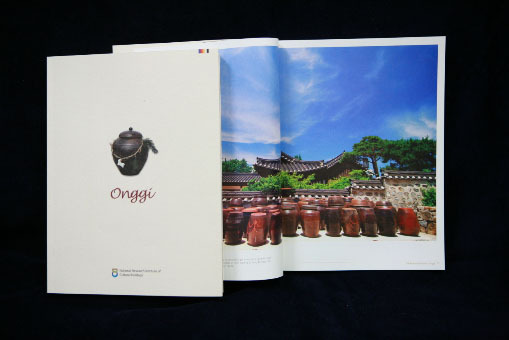
Onggi, a traditional Korean pottery has a significant role as a container preserving food in Korean food culture. In fact, among this time is when we remind of the rows of kimchi and doenjang (soybean paste) jars that used to be stored in the house yard. Nowadays as plastic and stainless containers became popular and the housing environment has changed Onggi lost its popularity in daily life of Koreans. However, recently the cultural value and identity of Onggi has been acknowledged. Books written in English to promote a global use of Onggi have been published followed by attempts of contemporary interpretation on the traditional pot. Let’s take a closer look.


Onggi, traditional Korean pottery of daily life

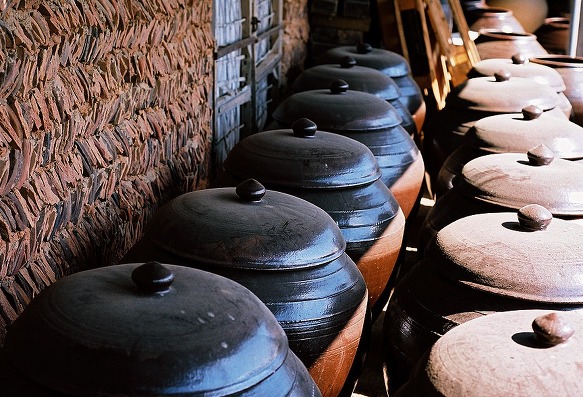
Onggi, in Korean means earthenware or pottery with a dark brown glaze, which is a native Korean pottery of daily life. Often used as a kimchi jar, for its cheap price and long-durability has been generally used by Koreans. Onggi Folk Museum in Ssangmun dong, Seoul, possesses a variety of Onggi; the big ones mostly used for preserving soy sauce, doenjang, kimchi and water and others used in a more wide range of use e.g. chimneys, candle bottles, lamp-oil containers, Gi-wa(roof tile) and tea pots.

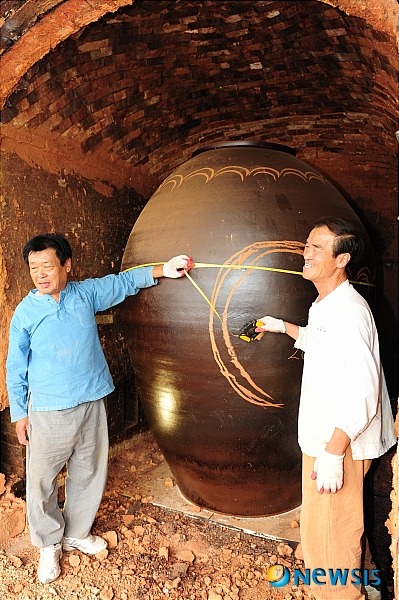
<The biggest Onggi made in Oe-gosan Onggi Village, height 229cm, girth 520cm>

The common use of Onggi can be explained with the characteristics of the Korean food culture. Onggi perfectly suits to preserve fermented food. Made from coarse sand-mud, its breathing holes allows air to enter but block water out that helps the preservation of the food for a longer duration. It also removes toxic substance of foods and reduces the smell. By enabling effective flow of air that helps the fermentation and preservation of the food, Onggi is perfect to store doenjang, soy sauce, kimchi and Jeotgal (salted seafood) keeping it fresh until the following year.

Especially, Onggi is a ‘pot from nature,’ that when cracked or broken to be thrown away it is simply back to earth as soil. The pot is made of soil, water, fire and wind that are harmless to our body. It is eco-friendly but also has traditional Korean scientific logics embedded, no surprise it was selected as one of ‘100 Cultural Symbols of Korea.’ Last year ‘Onggi Expo Ulsan Korea, 2010’ was hosted by Ulsan Oe-gosan Onggi village, the biggest Onggi trading center of Korea.


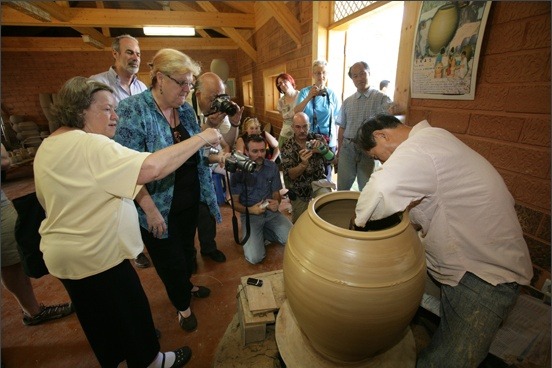
‘Onggi Expo Ulsan Korea, 2010’ under its theme ‘Onggi the Mirror of the Future’ introduced Onggi featuring the meanings found in its materials and decoration technology and also offering events to experience the difference between Onggi and other potteries from the world. It was the first international expo on traditional Onggi and especially its event for visitors to make their own Onggi was a great success.


CHA publishes an English edition book on Onggi

The National Research Institute of Cultural Heritage (NRICH), Cultural Heritage Administration of Korea published a book entitled as ‘Onggi’ written in English to introduce the Onggi culture to the world. In order to help the orientation of foreigners lots of visual images are included for explaining the production process of Onggi. The process is introduced by three themes – earth, fire and spirit, which are the essential elements for making the pot throughout the history. Among the three, spirit is the most critical that contains the heart of the artisan who made the pot.


This book will be distributed overseas through Korean Culture and Information Services and other related organizations. Also the PDF version will be available at the (NRICH) homepage (www.nrich.go.kr). In addition, NRICH based on their research on intangible cultural heritage of Korea, will continue to publish other English books for foreigners.

Due to the change of housing environments and industrial progress, there are less people who use Onggi in daily life, especially with the invention of kimchi refrigerator in Korea. A significant effort to establish the identity of Onggi culture inheriting its excellence as a traditional container for fermented food, and its historic and cultural value as deriving from the early pottery of human history, should be continued. To develop Onggi suitable for practical use in contemporary life or application to interior design can be one idea. Through a long-term and specific plan, a spread of traditional Onggi culture of Korea across the world is hopefully to be expected.

http://blog.naver.com/korea_brand

Sharing Intangible Heritage of Korea with the World


Cultural Heritage can be divided into tangible and intangible heritage. Cultural assets with forms e.g. a palace or ceramics would belong to the former category, while formless assets such as music, dance, drama, and recreations would belong to the latter one. Especially the legacy of intangible cultural assets has been continued by the people throughout history until now, being re-created by time contributing to the diversity of culture.

UNESCO has well acknowledged the importance of intangible cultural heritage. In 1997, at the 29th UNESCO general assembly it has adopted ‘Masterpieces of the Oral and Intangible Heritage of Humanity’ in order to protect intangible heritage which has been under threat to cease to exist by industrialization and globalization.

In 2003 ‘Convention for the Safeguarding of the Intangible Cultural Heritage’ was adopted by UNECO and it designated an ‘Urgent Safeguarding List’ and ‘Representative List’ of intangible cultural heritage of humanity. In 2001, 19 assets have been assigned as intangible cultural heritage and the list of it is on increase since then. Last October the food culture of France and Mexico was added to the list receiving lots of attention.


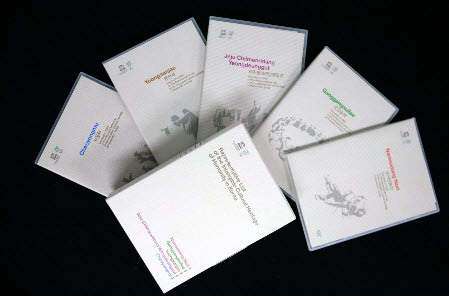
CHA produces DVD on Intangible Cultural Heritage of Humanity


Half of cultural assets inscribed on the UNESCO Intangible Cultural Heritage List are those of Korea, China and Japan; Kabuki theater of Japan, the Dragon boat festival and Acupuncture and moxibustion of traditional Chinese medicine of China. Korea has eleven assets on the list; the Royal Ancestral Ritual in the Jongmyo Shrine and its Music, the Pansori Epic Chant, the Gangneung Danoje Festival, Cheoyongmu, Ganggangsullae, Jeju Chilmeoridang Yeongdeunggut, Namsadang Nori, Yeongsanjae, as well as Daemokjang (traditional wooden architecture), Gagok (lyric song cycles accompanied by an orchestra), and Falconry the last three recently added to the list.

The National Research Institute of Cultural Heritage (NRICH), Cultural Heritage Administration of Korea produced contents with foreign language services introducing the eleven assets distributed by this month. A video clip on five assets inscribed on 2009 (Cheoyongmu, Ganggangsullae, Jeju Chilmeoridang Yeongdeunggut, Namsadang Nori, Yeongsanjae) is as well produced in three language editions with Korean, English and French. The clip includes a brief introduction on each relevant item that will be a useful resource for foreigners interested in Korean culture.

To promote active use of it, NRICH will distribute those video clips to relevant organizations and researchers in Korea and overseas, as well as providing online access to the material at NRICH homepage. High-quality contents on the intangible cultural heritage of Korea acknowledged by UNESCO is planned to be developed, produced and distributed every year. Such attempts is expected to improve a worldwide recognition on those heritages of Korea that has been under-promoted, despite of its value and significance representing the history, culture and identity of Korea.


The Intangible Cultural Heritage, the dwelling place for the Korean Spirit

<Namsadang Nori, No.3 Important Intangible Cultural Properties of South Korea>

Let’s take a closer look to the five cultural assets featured on the DVD produced by NRICH.
Namsadang Nori is the no.3 important intangible cultural properties of South Korea. Literally meaning ‘all-male vagabond clown theatre,’ it is a traveling entertaining theater troupe consisted of forty to fifty men enjoyed by the common people.

Kkokdusoe (the head of the group) leads the group followed by gombaengisoe, tteunsoe, gayeol, ppiri, and jeoseungpae performing the six sessions of nori (recreation) that are Pungmul, Beona, Salpan, Eoreum, Deotboegi, and Deolmi. Its origin derives from late Joseon. It was to wish peace and wealth for the villages and deliver joy to the common people through various music and performance.

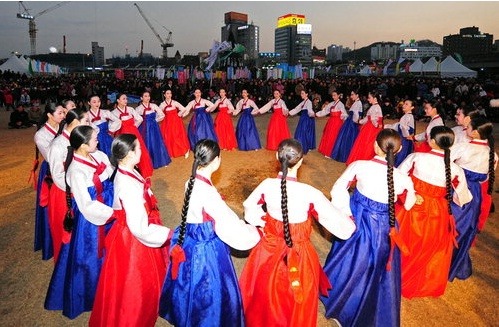
Ganggangsullae, the no.8 important intangible cultural properties of South Korea, is a more familiar traditional recreation of Korea. The tradition comes from the South-western area of Korea performed to wish good harvest and fecundity.

Especially a grand Ganggangsullae used to be performed on the night of Chuseok (Korean Thanksgiving), which origins back from the Japanese Invasion of Korea in 1592. Admiral Yi Sun-shin lighted up torches on the hill and gathered women to play Ganggangsullae to fake the size of the army to the enemy and later the play continued to sing joys and sorrows of life.

<Ganggangsullae, No.8 Important Intangible Cultural Properties of South Korea>

Cheoyongmu is the final dance of Narye and Yeonre, successive national royal events of Korea. It is the only royal dance performed with human face masks. The narrative of the dance is about getting rid of misfortune based on the principle of Yin-Yang and the Five Elements. Through its dazzling and confident movements the dance delivers great energy and vigor to the audiences.

Yeongsanjae is a kind of 49 jae (a Buddhist memorial ceremony held on the 49th day of one’s death). It is a ceremony for spirits to attain eternality based on the Buddhist faiths. It cultural value is recognized for reproducing Young-san Hwe-sang, reminiscences of preach Sakyamuni has performed on Vulture Peak Mountain; also called as Young-san jak Bup, a representative providence ceremony of Buddhism.

Jeju Chilmeoridang Yeongdeunggut is a kind of haenyeo gut (haenyeo means female diver, gut is a type of exorcism) that is part of the unique cultural heritage of Jeju along with haenyeo and folk religion. It has a cultural meaning as a cultural festival embracing the local community and encouraging mutual understanding between the people living on Jeju Island.

To preserve these inherited cultural assets of Korea an active promotion on the international stage should be continued. An active support and participation from the Korean people preserving and promoting their cultural heritage should be followed as well.

http://blog.naver.com/korea_brand
Saturday, January 1, 2011

Korea’s Ancient Capitals

The present is an accumulative total of the past. So, if you want to really know about the present of a country, you need to delve deep into its age-long history.

And learning about its past capitals – the central locations for the country’s politics and culture – will be a very helpful and significant approach.

The cities of Gyeongju, Gongju, Buyeo and Iksan were designated as the ancient capitals of Korea in accordance with the Special Act on the Preservation of Ancient Capitals decree enacted in March 2005.
For a city to become a capital, it must be some place that is well-suited for residence; a strategic location against foreign invasions; and an all-around convenient spot for overseeing the country. That’s why capitals are usually located near a big river, surrounded by mountains, and furnished with a broad expanse of fertile planes.


Gyeongju, Gongju, Buyeo and Iksan 

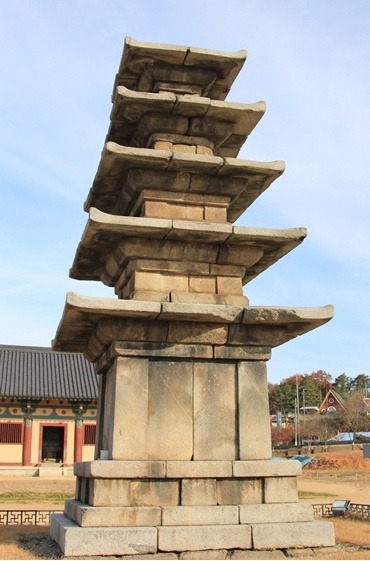
<Jeonglim Saji 5 Floor Tower in Buyeo>

 The Baekje Kingdom (18 BCE – 660 CE), one of the Three Kingdoms of Korea, together with Goguryeo and Silla, controlled some colonies in China and most of the western Korean Peninsula at its peak in the 4th century and was a significant regional sea power.

In the 5th century, Baekje retreated under the southward military threat of Goguryeo, and in 475 its capital moved to Ungjin (present-day Gongju). Gongju is home to numerous historic sites including Gongsanseong Fortress, Magoksa Five-story Stone Pagoda, and Seokjang-ri Old Stone Age Ruins.
In 538, King Seong moved the capital to Sabi (present-day Buyeo County), home to significant relics such as the five-storied stone pagoda of Jeongnimsa Temple site and Banwollu Tower.


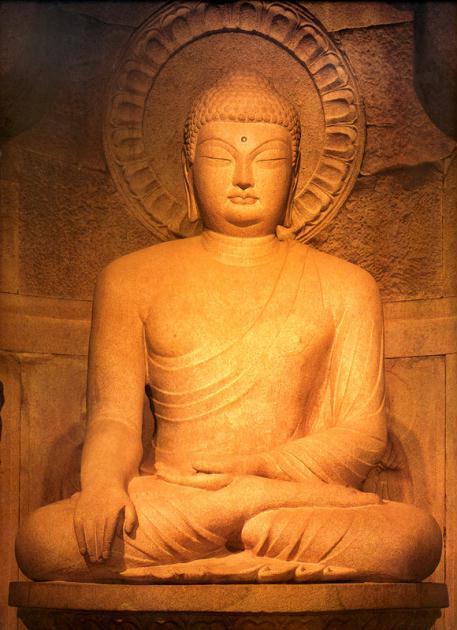
<Seokguram Grotto in Gyeongju, a UNESCO World Heritage>

Gyeongju was the capital of the ancient kingdom of Silla (57 BC-935 AD) which ruled most of the Korean Peninsula between the 7th and 9th centuries. A vast number of archaeological sites and cultural properties from this period remain in the city. Among such historical treasures, Seokguram grotto, Bulguksa temple, Gyeongju Historic Areas and Yangdong Folk Village are designated as World Heritage Sites by UNESCO. The many major historical sites have helped Gyeongju to become one of the most popular tourist destinations in South Korea.


A Map of Korea’s Ancient Capitals 

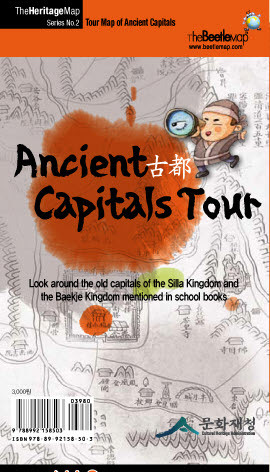
The Cultural Heritage Administration recently published a map of Korea’s ancient capitals in English as a tourist guide to important historical sites in Korea.

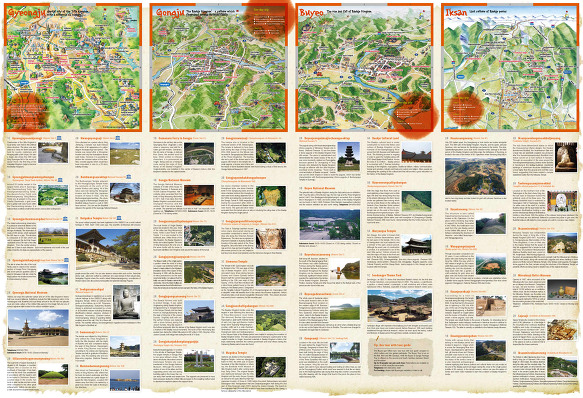
The “Ancient Capitals Tour” map is designed to be easy to carry and use. The map provides information on the history, geography, folklore, and contemporary situation of the four ancient capitals in South Korea: Gyeongju, Gongju, Buyeo and Iksan.  

 
<Ancient Capitals Tour Map in English>
 
The map also provides useful tourist information, including guides to accommodations and public transportation. Maps will be distributed free of charge at cultural centers and tourism agencies.

Growing Coffee on Jeju Island

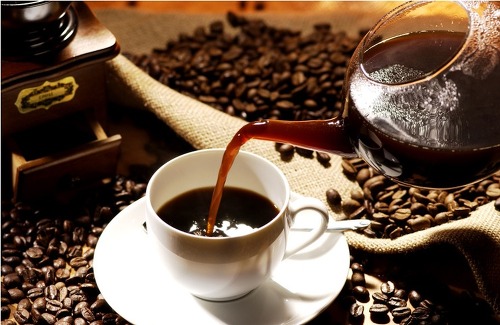
Love for coffee is getting pandemic these days. You can find a coffee shop in every block of a sizable office district. Some people go so far as buying espresso machines and other coffee gadgets to furnish in their own homes. (Well, being one of those crazy coffee lovers myself, I am just being envious.)

Coffee is a highly sensitive plant, requiring specific growing conditions. It grows in subtropical regions where the temperature stays above 10 degrees Celsius even during winter. That’s why farming coffee has been mostly considered out of the question in Korea.

Well, Ms. Roh Jin-Yi doesn’t accept that.


<Most of the world’s coffee is grown in a band around the equator from 25 degrees
north to 25 degrees south of the equator>
 

Korea’s First Coffee Farmer

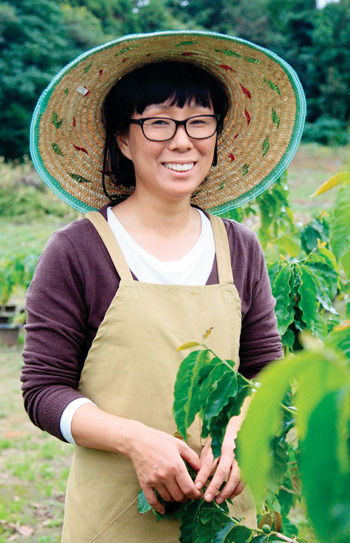
The first coffee farmer in Korea, Ms. Roh has invested all her money and energy in farming coffee in a 400-pyeong (1 pyeong equals 3.3 square meters) green house in Jeju City since early 2008.

Despite the unfavorable conditions, even Jeju being too cold, Ms. Roh has been persistent in realizing her dream of cultivating coffee. And she has succeeded to reap enough coffee for about 10% of Jeju citizens to sample taste.

And last October, Ms. Roh even held the first Jeju Coffee Festival in her own coffee plantation. At the festival, there was coffee tasting, coffee drinking competitions, hands-on experience of roasting coffee beans and hand-dripping. 


<The first coffee farmer in Korea, Ms. Roh Jin-Yi>
 

Hard Work, But I Love It

Ms. Roh is currently growing some 25,000 coffee trees in a 5,600 square meters plantation. And it is no easy job looking after those highly sensitive plants. They have to be watered twice a day (at the break of dawn and around sunset) for 3, 4 hours. A storm hits, and the fragile plants get all knocked out of their pots, and Ms. Roh has to spend many sleepless days harnessing them back in. They also need to get nutrition shots at regular, designated times.

Roh says she does not expect coffee farming to become a profitable business.

“It’s costly to keep the green house warm and it takes 3 to 5 years from germination to harvest. But I’m doing this not because I want to make money, but because I like it,” says the coffee farmer. And adds, “If I make money later, I would like to build a coffee museum,” expressing her ultimate ambition.

Many cheers and well wishes to her dream!